
Central Indiana facility managers have always carried the responsibility of keeping buildings running safely and efficiently. Heating, cooling, plumbing, and controls get most of the attention because when they fail, everyone notices. Indoor air quality (IAQ), on the other hand, tends to be invisible—until it becomes a problem. And when it does, the consequences show up fast in employee health, productivity, and tenant satisfaction.
Good IAQ isn’t a “nice to have.” It’s a fundamental part of operating a professional, healthy facility.
Why Indoor Air Quality Matters More Than Ever
The air inside a commercial building directly affects the people who spend eight to ten hours a day breathing it. Poor ventilation, dirty equipment, excess humidity, or airborne contaminants can quietly undermine employee health long before complaints turn into work orders.
Headaches, fatigue, sinus irritation, dry eyes, and respiratory issues are common signs of degraded indoor air quality. Over time, these issues contribute to increased sick days, reduced concentration, and higher turnover. From a management standpoint, that translates into real costs—lost productivity, higher absenteeism, and growing pressure from tenants or occupants.
Facilities that take IAQ seriously tend to see fewer complaints, more consistent comfort, and better overall performance from their mechanical systems.
Common IAQ Problems in Commercial Buildings
Many indoor air quality issues don’t stem from a single failure, but from a collection of small, neglected issues that build over time.
Poor ventilation is one of the most common culprits. Systems that aren’t delivering adequate fresh air allow contaminants like carbon dioxide, volatile organic compounds (VOCs), and odors to accumulate. Employees may not know what’s wrong—they just know the space feels stuffy or uncomfortable.
Dirty HVAC components are another frequent issue. Clogged filters, dirty coils, and neglected air handlers circulate dust, allergens, and microbial contaminants throughout the building. What starts as a maintenance issue becomes a health concern.
Humidity control is often overlooked as well. Excess moisture encourages mold and mildew growth, while overly dry air can irritate respiratory systems and skin. Both extremes make occupants uncomfortable and can damage building materials over time.
The Link Between HVAC Maintenance and Air Quality
Indoor air quality doesn’t improve by accident. It’s the byproduct of properly designed systems and disciplined maintenance.
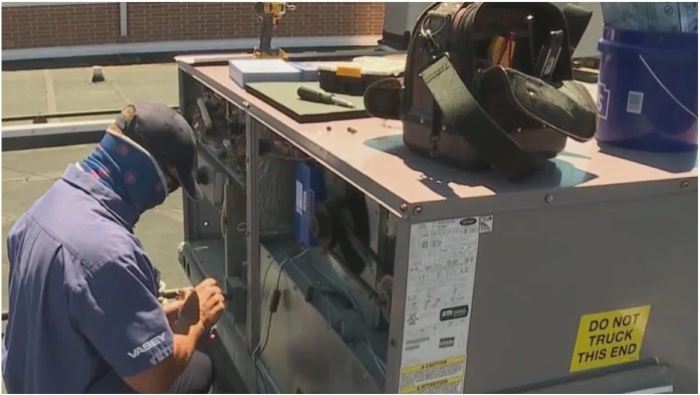
Routine HVAC maintenance plays a major role in keeping air clean and breathable. Regular filter changes, coil cleaning, airflow balancing, and sensor calibration all help ensure that systems are doing what they were designed to do—move clean, conditioned air efficiently throughout the building.
Deferred maintenance almost always shows up first as an air quality issue. When systems struggle to move air or maintain temperature and humidity, contaminants linger longer, and comfort suffers. Over time, equipment works harder, energy use climbs, and failures become more likely.
Facilities that invest in preventive maintenance don’t just protect equipment—they protect the people inside the building.
Air Filtration, Purification, and Modern Solutions
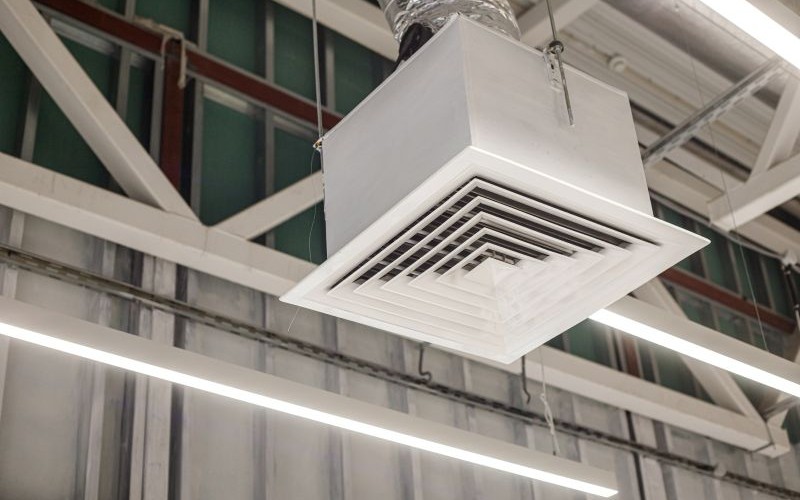
Indianapolis commercial facilities have more tools than ever to improve indoor air quality. High-efficiency filtration, air purification technologies, and improved ventilation strategies can dramatically reduce airborne contaminants when applied correctly.
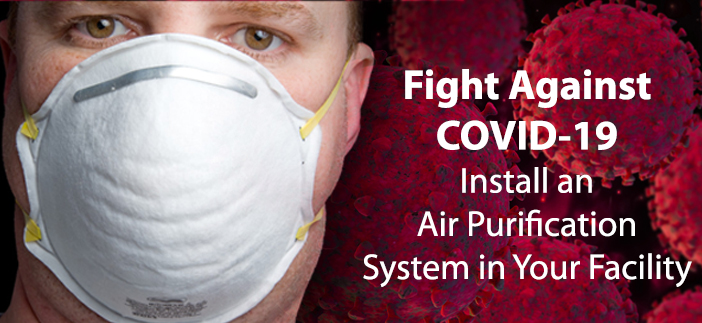
Upgraded filtration can capture finer particles, including dust, pollen, and other allergens. Air purification systems can help neutralize bacteria, viruses, and odors, especially in high-occupancy or sensitive environments like offices, healthcare spaces, and educational facilities.
That said, technology alone isn’t the answer. These systems must be properly selected, installed, and maintained. Oversized filters, incorrect pressure drops, or poorly integrated equipment can do more harm than good. IAQ improvements should always be part of a broader mechanical strategy, not a bolt-on afterthought.
What Facility Managers Should Be Doing Now
Strong indoor air quality starts with awareness and accountability. Facility managers should understand how their HVAC systems are designed to operate and whether they’re actually performing as intended.
Regular inspections, documented maintenance, and periodic air quality evaluations help catch issues early—before occupants feel the effects. Clear communication with service providers ensures that IAQ isn’t treated as a buzzword, but as a measurable part of building performance.
Working with experienced mechanical partners who understand airflow, controls, and system integration makes a significant difference. Companies like VASEY Facility Solutions approach indoor air quality as part of the whole building system—connecting maintenance, design, and long-term reliability instead of chasing short-term fixes.
The Bottom Line
Indoor air quality isn’t just about comfort—it’s about health, productivity, and professionalism. Employees may not comment when the air is good, but they notice immediately when it isn’t.
Facilities that prioritize clean, well-managed air create better working environments, reduce operational headaches, and protect their long-term investments. For facility managers, that’s not extra work—it’s simply part of doing the job right, the way it’s always been done when quality matters.
VASEY Facility Solutions is one of the top Indiana HVAC and mechanical services companies that can assist you with all your facility maintenance issues.
Contact us today!